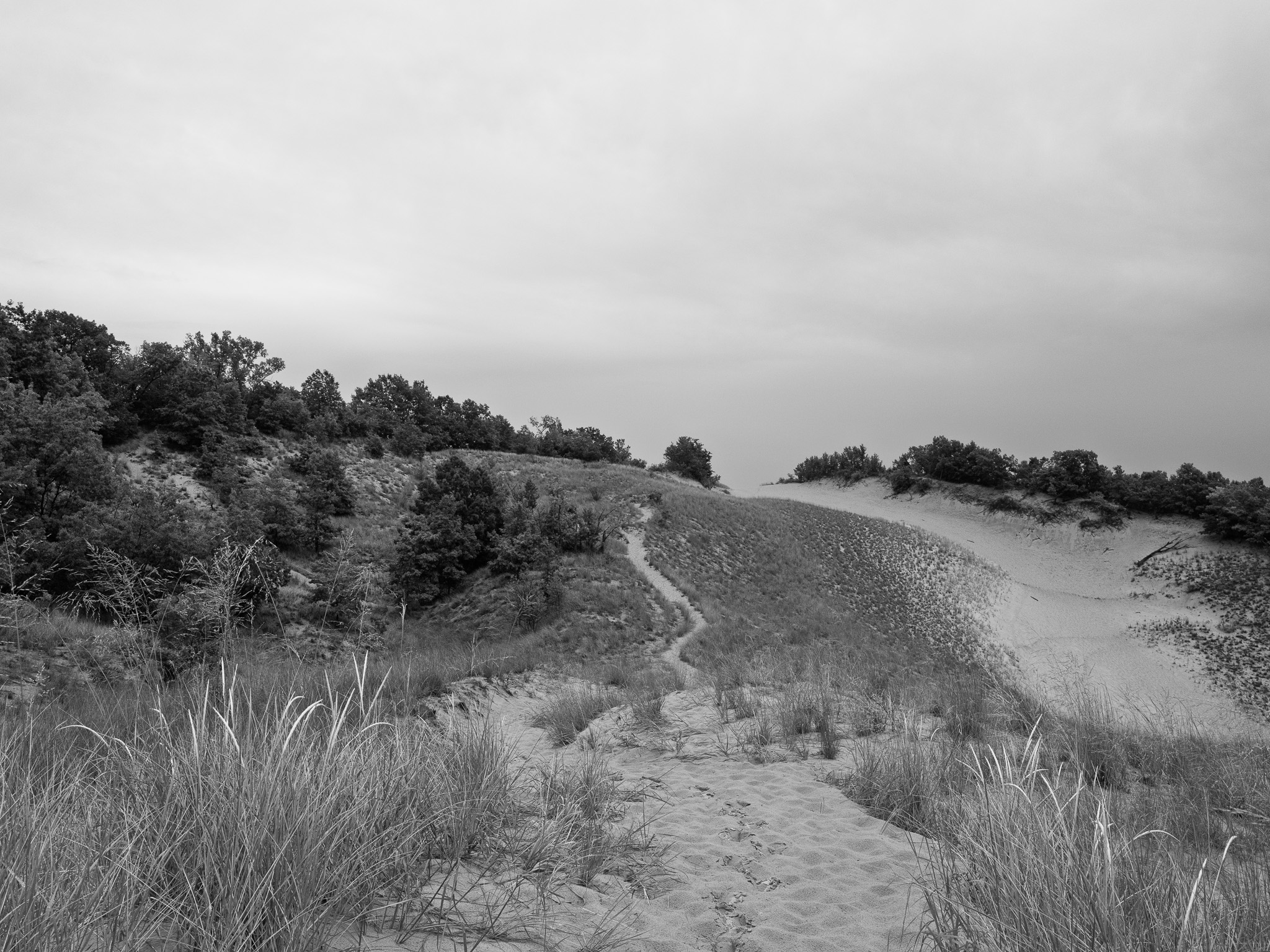
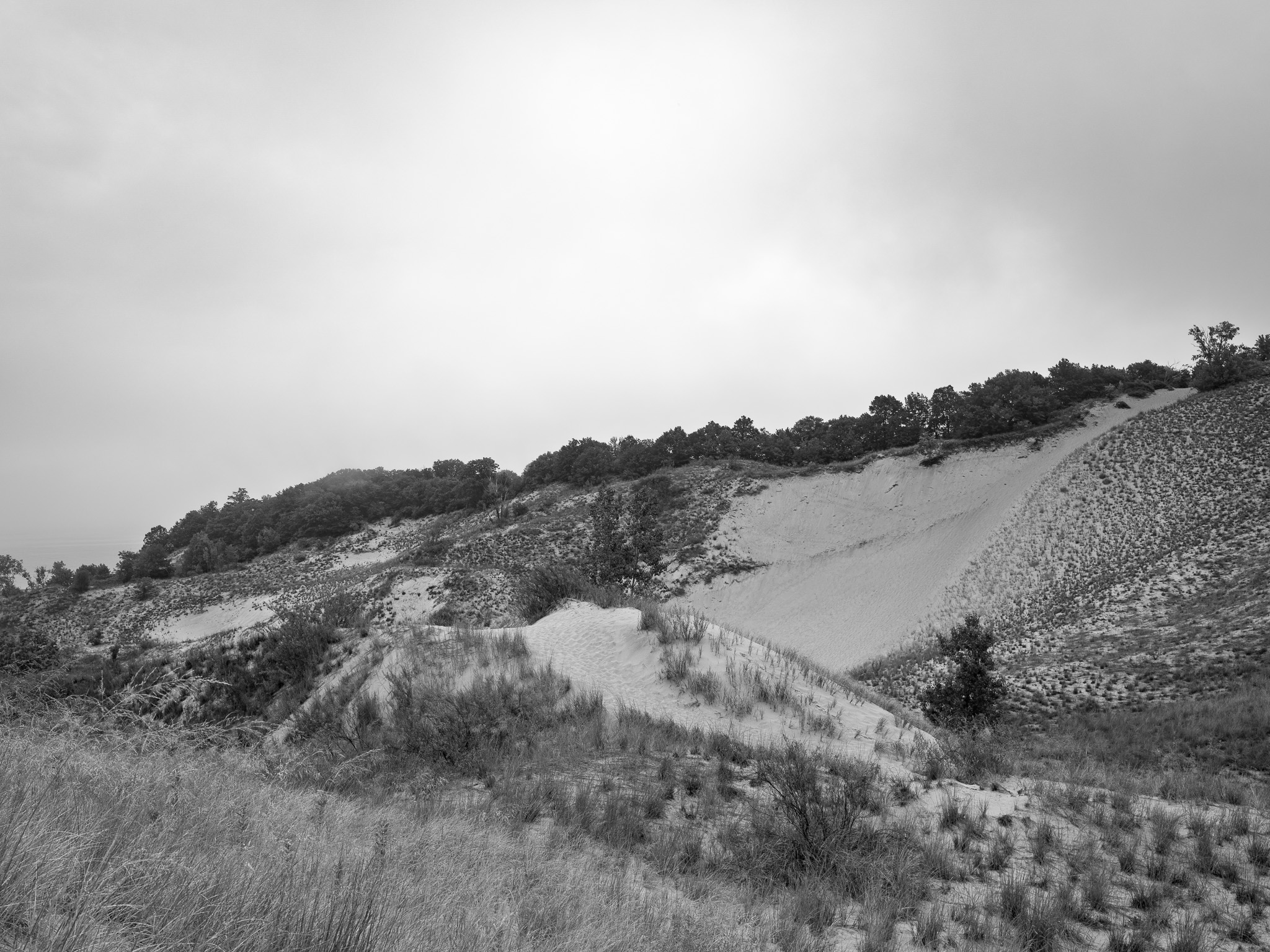
Holocene aeolian dune sand (the high dunes largely post-Nipissing, roughly 6,000 to 4,000 years old) over Late Pleistocene glacial and glaciolacustrine deposits on the abandoned bed of Glacial Lake Chicago (~14,000 years)
Epoch
Holocene (dune sand) over Late Pleistocene (Wisconsin glaciation)
Bodéwadmi (Potawatomi), of the Council of Three Fires (Anishinaabe) alliance with the Odawa and Ojibwe; the dunes lie in the St. Joseph River valley homeland of the Pokagon Band, whose villages stood along the St. Joseph (Sakiwäsipi), Paw Paw, and Kalamazoo rivers; when the 1833 Treaty of Chicago ordered the Potawatomi removed west, Leopold Pokagon secured an exemption for his Catholic band, who alone among Michigan Potawatomi kept their homeland and avoided the 1838 Trail of Death forced march to Kansas, becoming today's federally recognized Pokagon Band of Potawatomi Indians (re-recognized 1994).
Displacement & Tenure
Cession: Treaty of Chicago (August 29, 1821), signed by Lewis Cass and Solomon Sibley with the Ottawa, Chippewa, and Potawatomi, ceded southwestern Michigan south of the Grand River, including present Berrien County; Cession: Treaty of Chicago (September 26, 1833) ceded the last Potawatomi lands around Lake Michigan and mandated removal within three years, but Leopold Pokagon negotiated a written exemption for his band, who purchased land in Cass County and remained; other regional Potawatomi were removed in the 1838 Potawatomi Trail of Death to Kansas.
Shadow History
The dune system the park now protects was commercially strip-mined for foundry sand as recently as the 1970s. Lake Michigan dune sand set the industry standard for automotive foundry molding sand, roughly 95 percent of the state's mined dune sand going to iron casting, and beginning in 1949 a succession of companies mined the dunes of the Warren Dunes area of Berrien County.
Ecology
A transgressive dune complex ranging from bare, wind-active open dunes (Tower Hill, Mount Randal, Mount Edward) held by marram grass, sand cherry, and cottonwood, back through stabilized dunes carrying black oak forest and beech-maple woods, with interdunal wetland swales; federally threatened Pitcher's thistle (Cirsium pitcheri), a Great Lakes dune endemic, occurs on the open-dune habitat.
Hydrology
Drains directly to Lake Michigan (Great Lakes and St. Lawrence basin) along three miles of shoreline; lies within the Galien River watershed of far southwestern Michigan, with the Painterville Drain among the mapped local waterways; the Galien River reaches Lake Michigan just south of the park at New Buffalo.