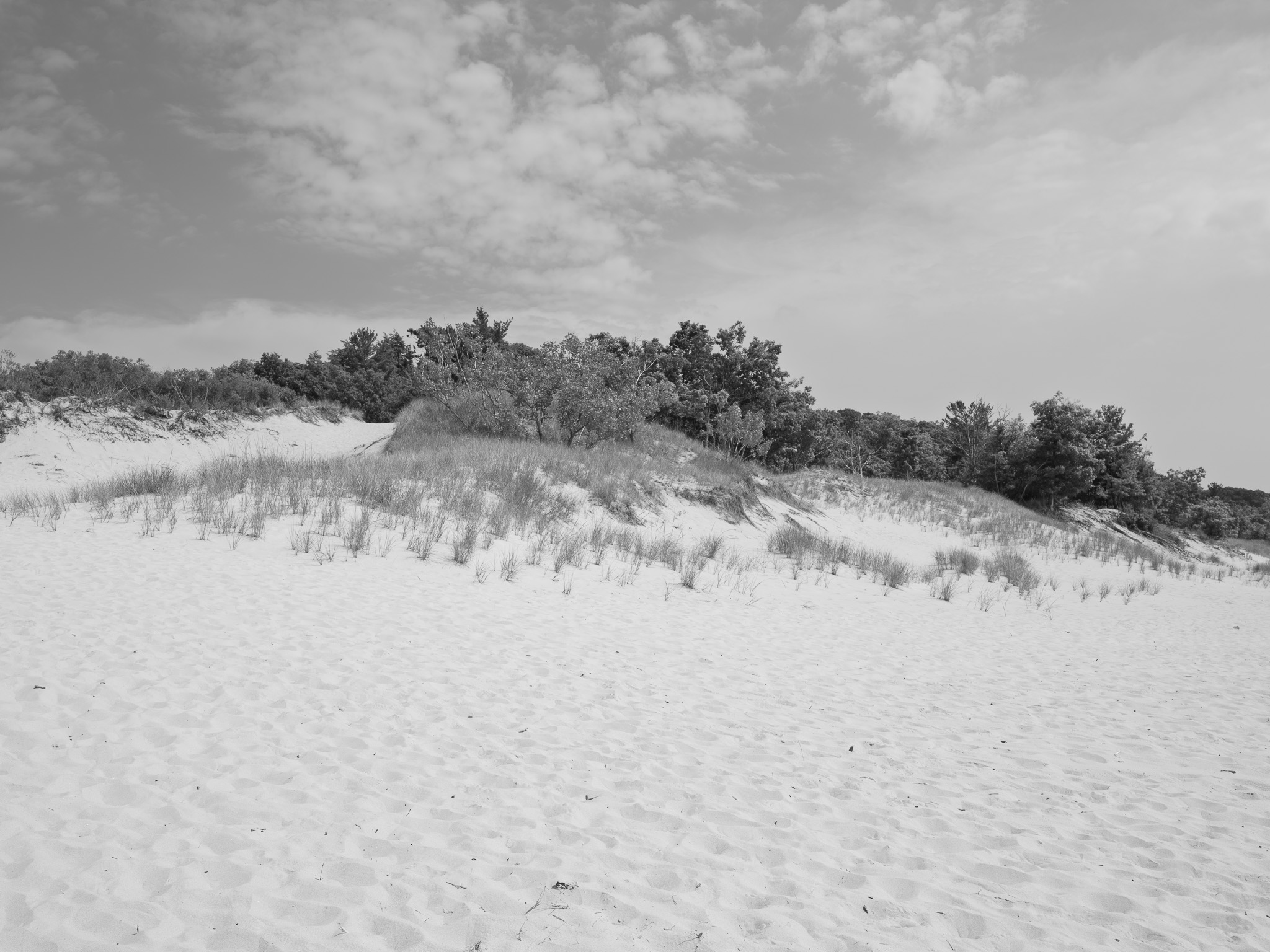
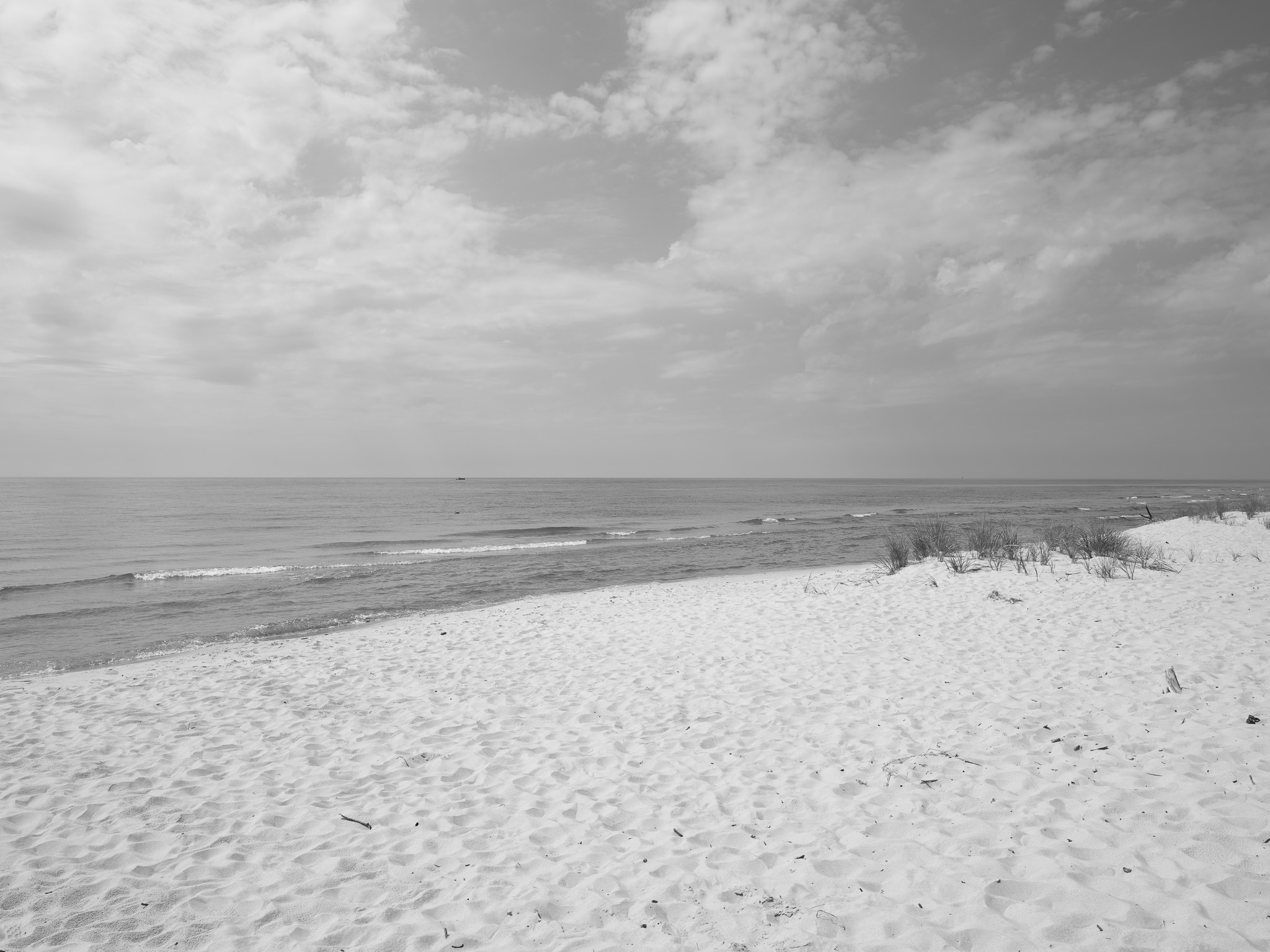
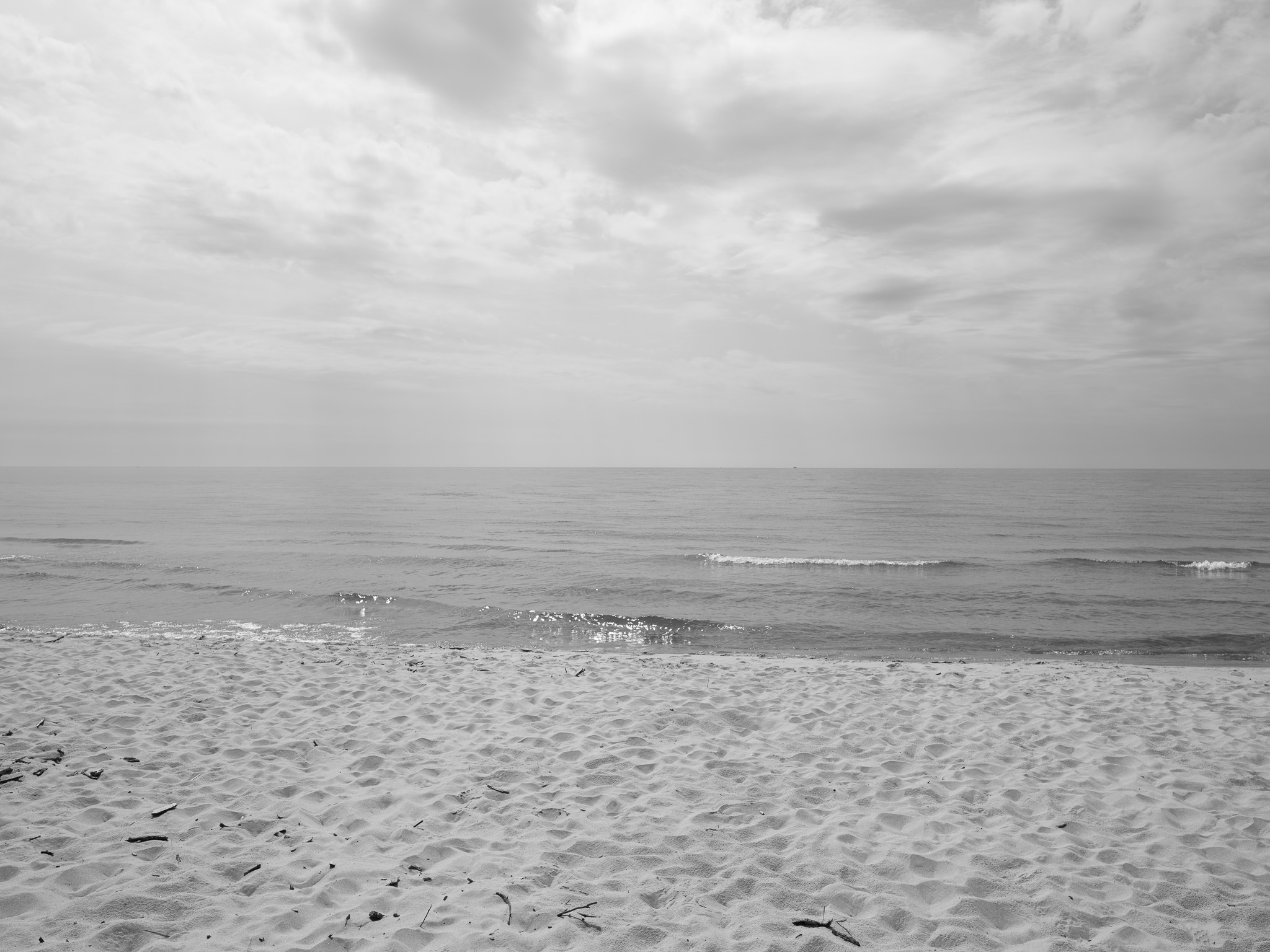
Holocene aeolian dune sand (transgressive parabolic dunes most active since the mid-Holocene Nipissing transgression roughly 5,500 years ago, with a back-dune ridge dated to about 7,200 years) over Late Pleistocene glaciolacustrine sand of Glacial Lake Chicago (~14,000 years)
Epoch
Holocene (dune sand) over Late Pleistocene (Wisconsin glaciation)
Odawa (Ottawa) primarily, with Ojibwe (Chippewa) and Bodéwadmi (Potawatomi) of the Council of Three Fires (Anishinaabe); the Muskegon and Grand River lakeshore was Odawa country, the villages and fisheries of the Grand River bands reaching north along the dune coast; their descendants include the federally recognized Little River Band of Ottawa Indians and the state-recognized Grand River Bands of Ottawa Indians.
Displacement & Tenure
Cession 205: Treaty of Washington (March 28, 1836), by which the Ottawa and Chippewa ceded roughly 13.8 million acres of the northwestern Lower Peninsula and eastern Upper Peninsula, about a third of present-day Michigan, including the Muskegon and Ottawa county lakeshore; the treaty named first-class chiefs of the Grand River and the Muskegon River and promised only a five-year reservation on the Pere Marquette River with annuities, and the 1855 Treaty of Detroit dissolved the collective Ottawa and Chippewa relationship into individual band allotments; despite removal pressure the Grand River Odawa persisted in west Michigan, the Little River Band securing reaffirmed federal recognition in 1994 while the Grand River Bands continue to pursue restoration.
Shadow History
Hoffmaster's dunes are part of the Lake Michigan coastal dune belt of Muskegon and Ottawa counties, among the most heavily strip-mined dune landscapes in the state: this shoreline's clean quartz sand was prized as automotive foundry molding sand and hauled off by the trainload for much of the twentieth century, one Ottawa County operation just south of the park working its dunes for more than seventy years, so that the park's protected ridges now survive as an intact remnant of a coastal dune system consumed by industry along much of the rest of this shore.
Ecology
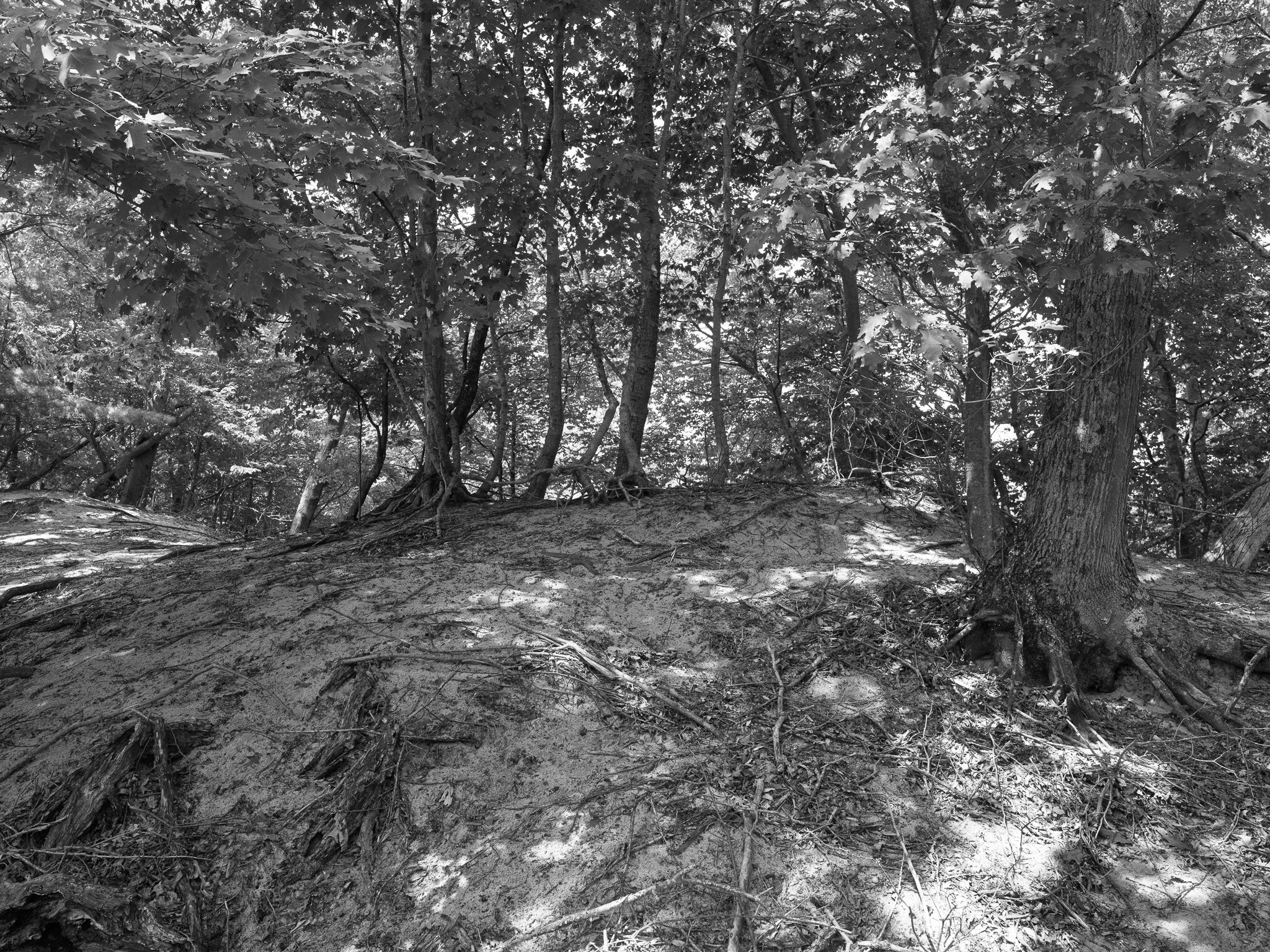
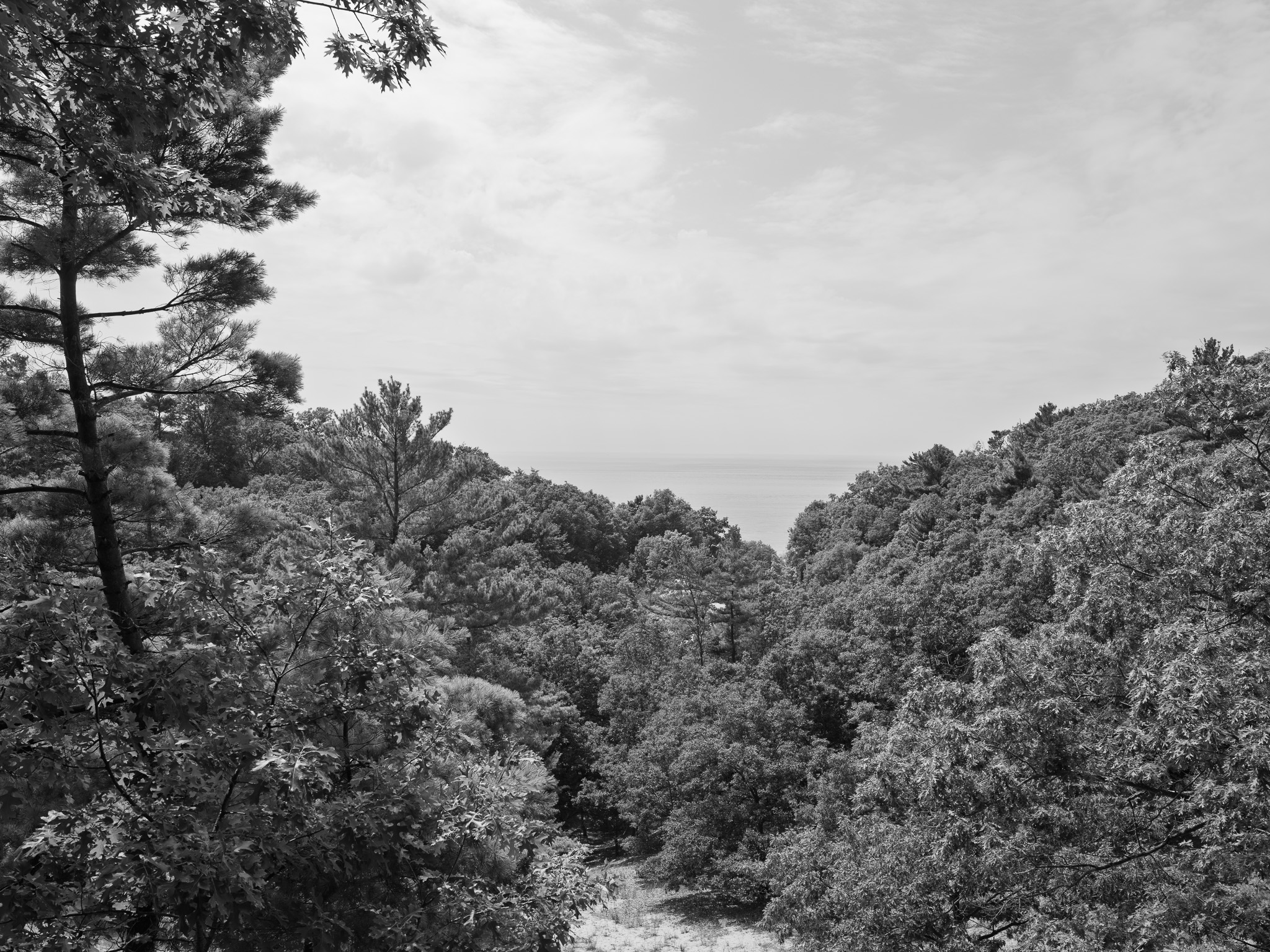
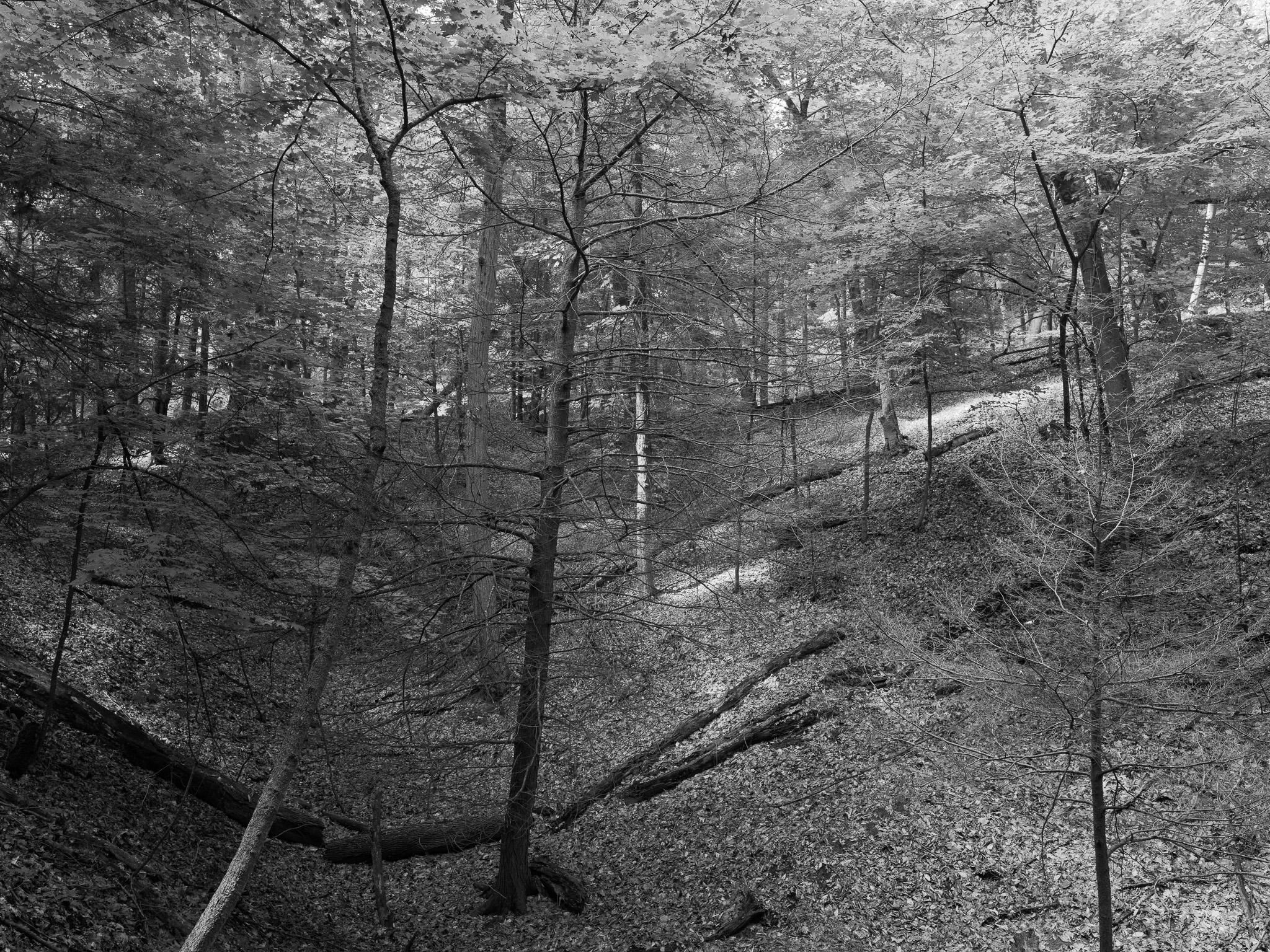
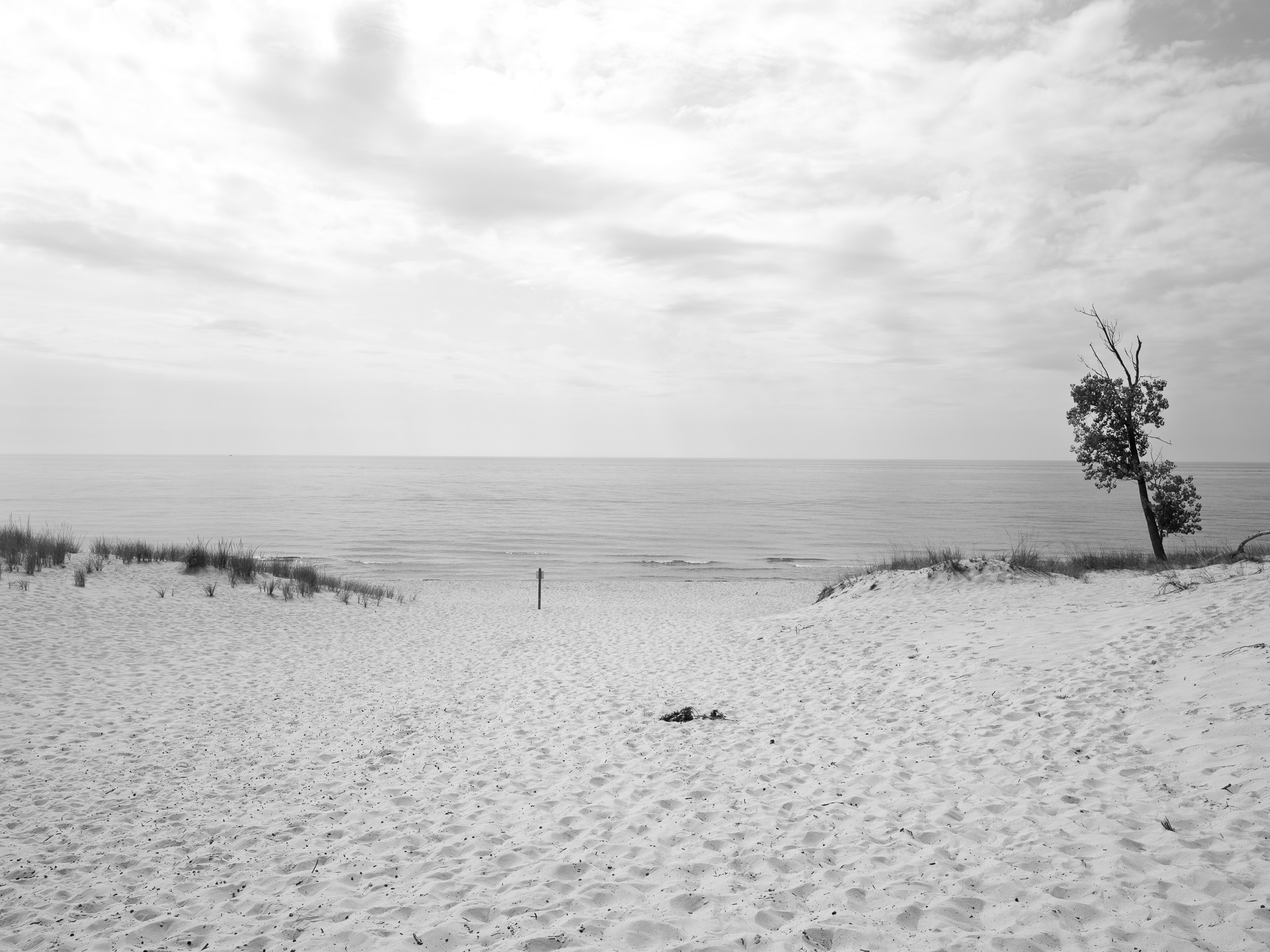
A transgressive Lake Michigan dune complex of open, wind-active parabolic dunes and blowouts held by marram grass and sand cherry, grading inland through stabilized back-dune ridges of black oak and beech-maple forest with wooded interdune hollows; federally threatened Pitcher's thistle (Cirsium pitcheri), a Great Lakes dune endemic, occurs on the open foredunes, and the park's forested interior is set aside as the dedicated Hoffmaster Wild Area.
Hydrology
Drains directly to Lake Michigan (Great Lakes and St. Lawrence basin) along about three miles of shoreline, on the stretch between the outlet of Mona Lake to the north and the Grand River at Grand Haven to the south; small dune-swale wetlands and groundwater seeps perch within the interdune hollows behind the foredune.