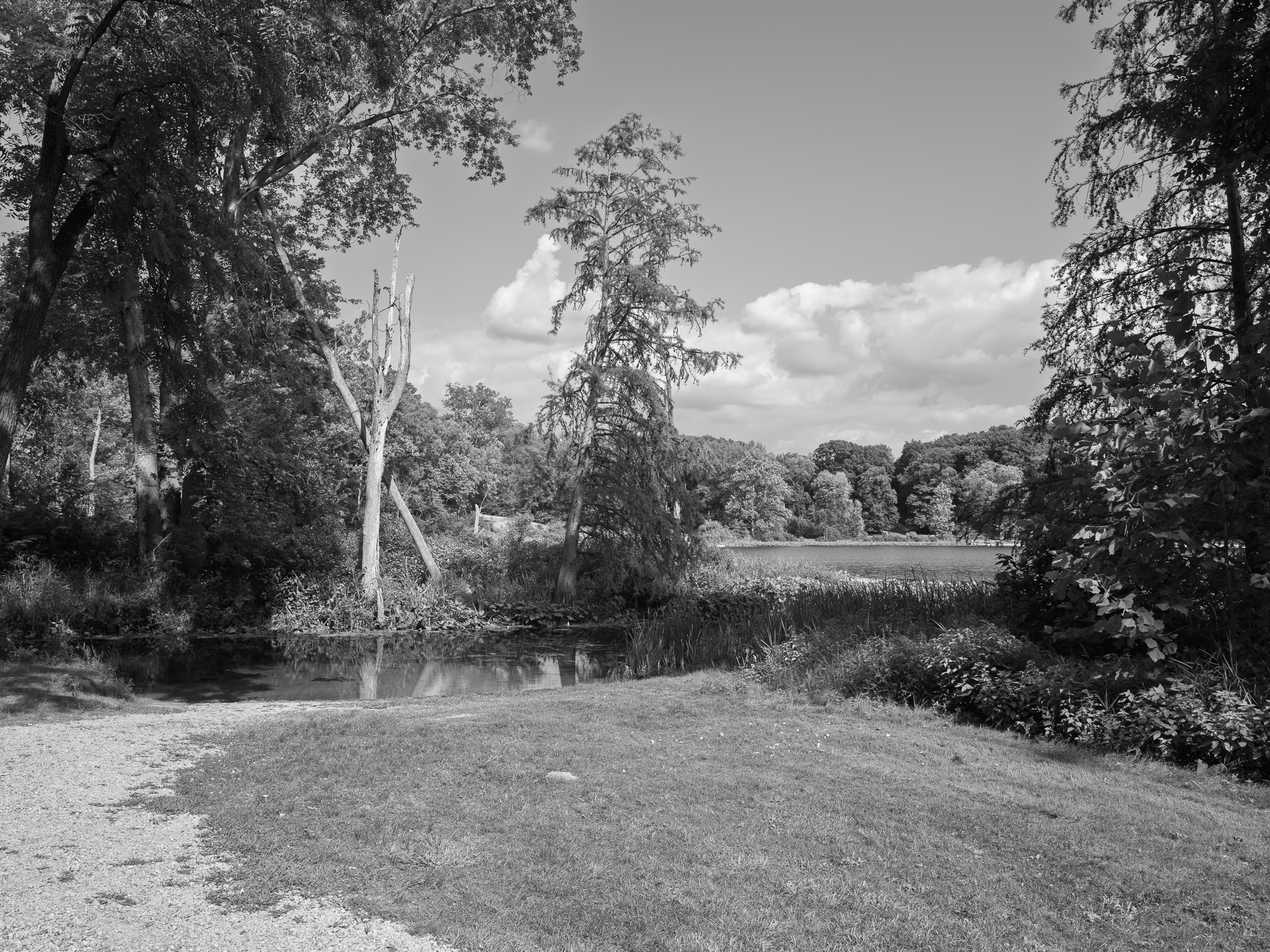
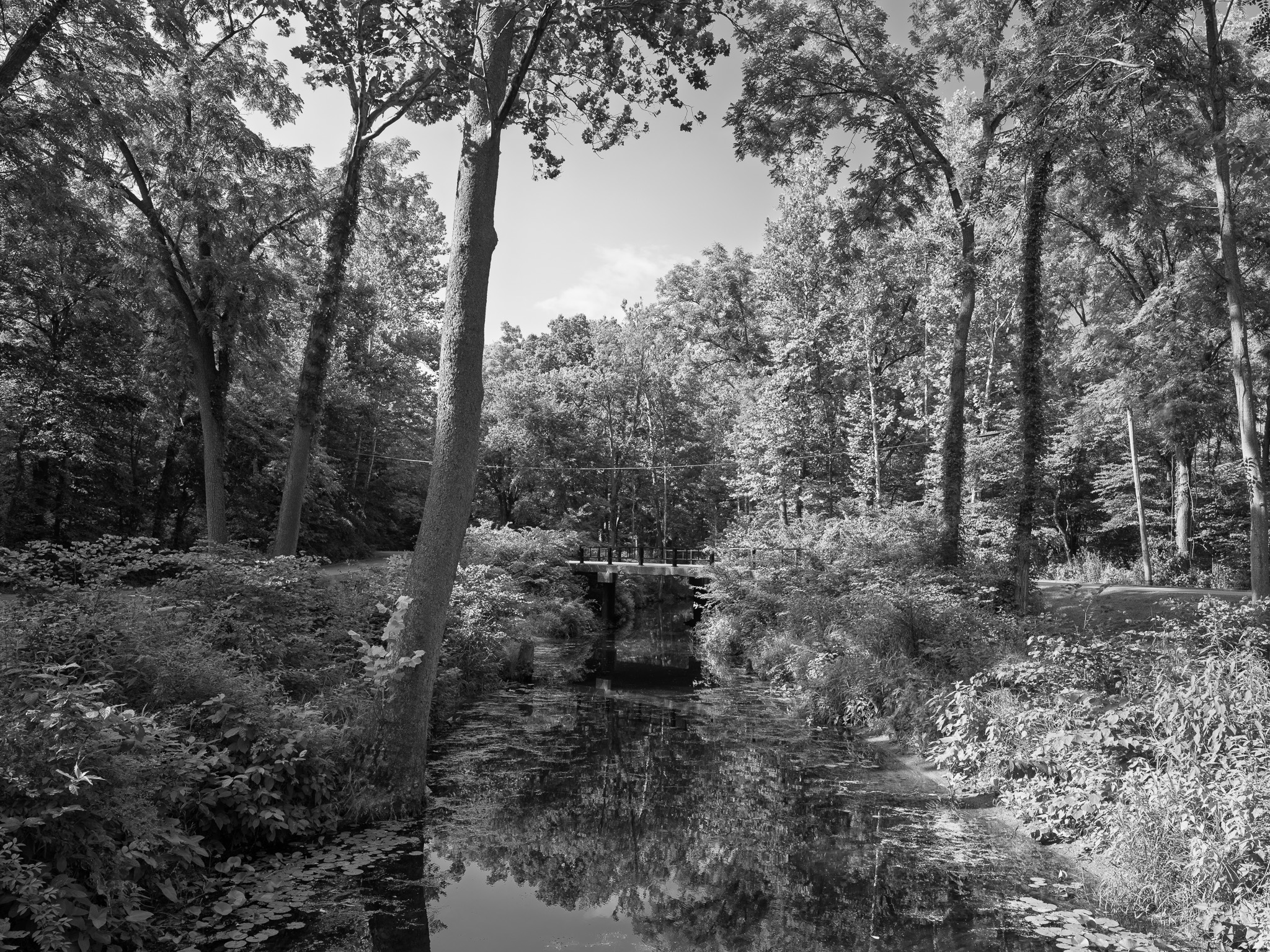
Late Pleistocene Wisconsin-age glacial deposits (kettle lakes, eskers, and kames left by the Saginaw and Erie glacial lobes, ~13,000 to 14,000 years) over ~370 Mya Upper Devonian Antrim Shale bedrock buried beneath as much as 360 feet of glacial drift
Epoch
Late Pleistocene (Wisconsin glaciation)
Myaamia (Miami) and Bodewadmi (Potawatomi); both nations occupied Noble County, where the Potawatomi lake country of northern Indiana met the Miami homeland to the south; Potawatomi families kept large summer villages along the lakes and streams and dispersed into small winter hunting and ice-fishing camps, and Bowen Lake inside the park was once called Indian Lake; the region lay within the wider Neshnabe (Potawatomi) and Myaamia world of the Wabash, Eel, and St. Joseph drainages before removal.
Displacement & Tenure
Cession 22: Treaty of Carey Mission (September 20, 1828), by which the Potawatomi ceded the tract of northeastern Indiana that includes the park, opening it to Euro-American settlement; the neighboring Miami country had already been narrowed by the Treaty of the Mississinewa at Paradise Spring (October 23, 1826); over the following decade the Potawatomi of northern Indiana were pressed off their reserved lands and forced west, culminating in the 1838 Potawatomi Trail of Death, a roughly 660-mile forced march from the Twin Lakes reserve near Plymouth to eastern Kansas on which more than 40 people, most of them children, died; the Miami of the Wabash valley were removed in 1846.
Shadow History
When the park was dedicated in 1960, much of the land was working farmland, pasture, and orchard, and the year-round homes and seasonal cottages that had grown up around the lakes were bought out and torn down, several of the cottages rented to early park visitors before demolition, erasing a small twentieth-century lake community. The kettle-lake landscape had already been reshaped by nineteenth and twentieth century agriculture: uplands were cleared and some of the smaller kettle wetlands and bogs drained or filled, and decades of adjacent farming seeded the aggressive autumn olive and multiflora rose that now crowd the reverting old fields. The Chain O'Lakes Correctional Facility, a state prison, opened at the park's southern edge in 1967.
Ecology
Oak-hickory upland forest of the Northern Lakes natural region, threaded with marsh, fen, and peat bog around the kettle lakes and edged by about 200 acres of restored prairie planted for grassland birds; nearly 200 bird species have been recorded, and the flora includes the state-endangered Short's aster and perfoliate bellwort, the state-rare red baneberry, and yellow ladyslipper.
Hydrology
A chain of kettle lakes, nine of them linked by narrow wooded channels, holding about 212 surface acres of water within the headwaters of the Elkhart River; the lakes drain by the South Branch of the Elkhart River, which rises in central Noble County, northwest to the Elkhart and then the St. Joseph River at Elkhart, placing the park in the Lake Michigan and Great Lakes basin; Bowen Lake, once called Indian Lake, is the deepest at 65 feet and Dock Lake the shallowest at 20 feet, with glacial eskers, a kame, and groundwater seeps ringing the shorelines.