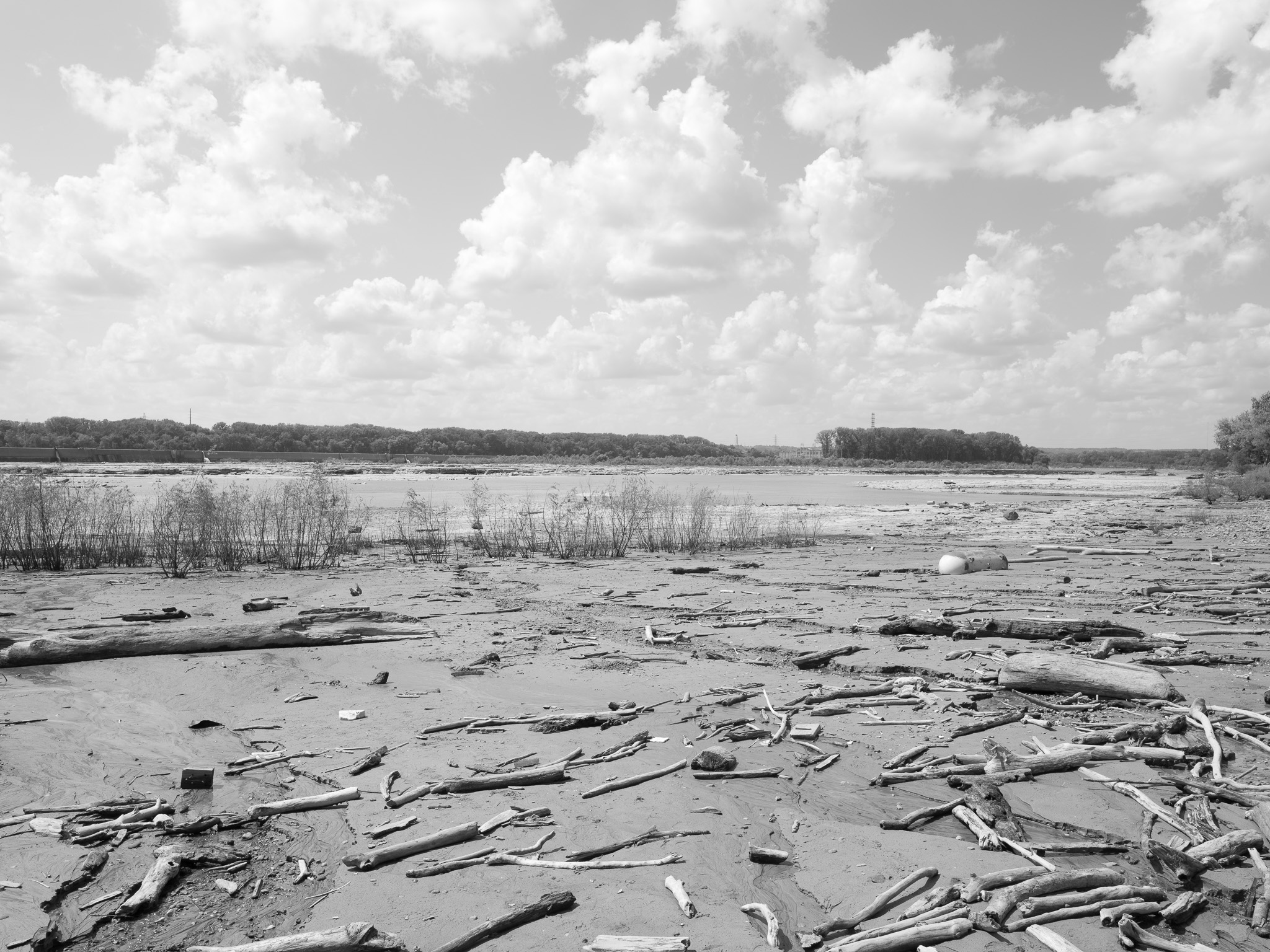
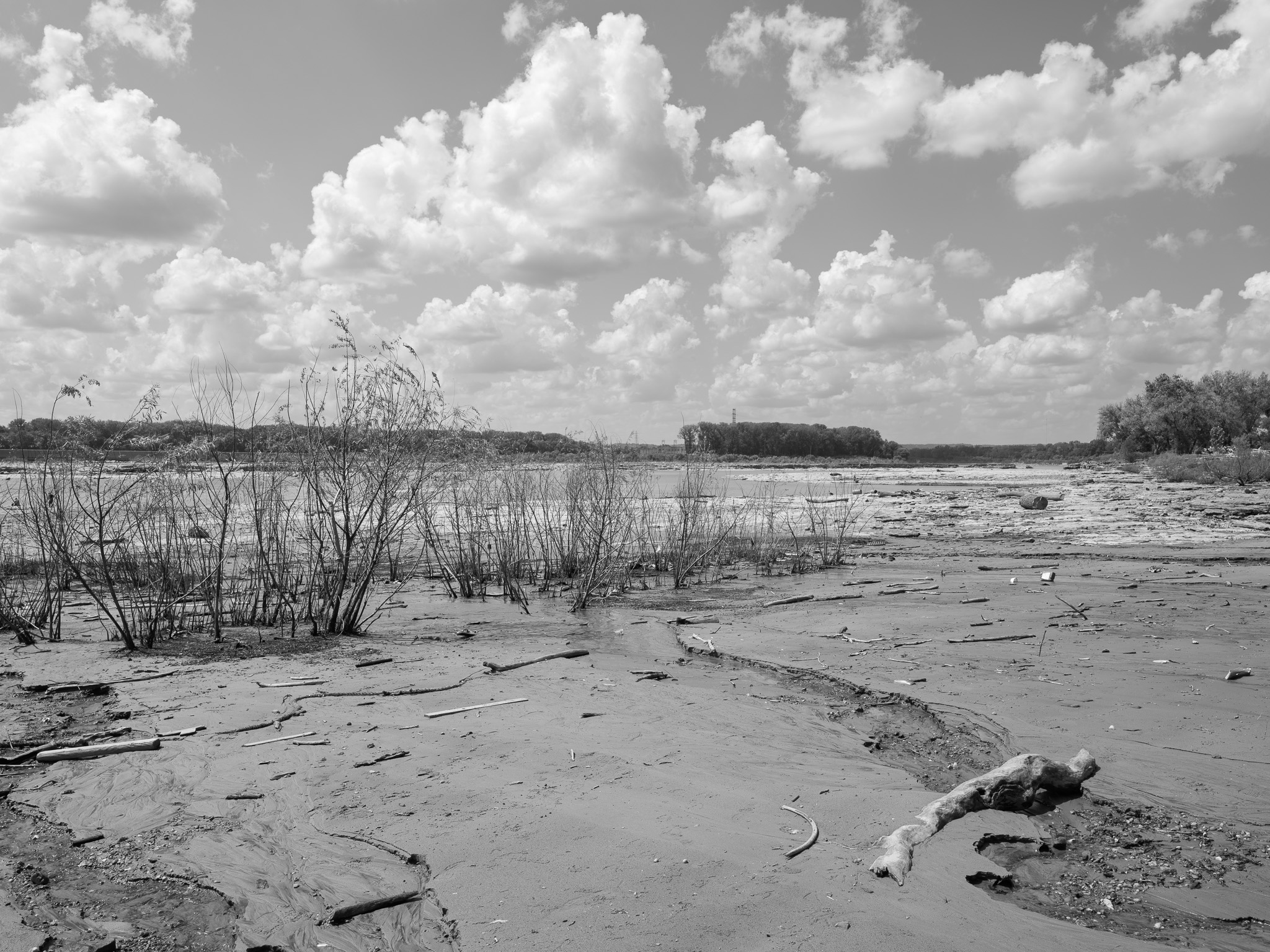
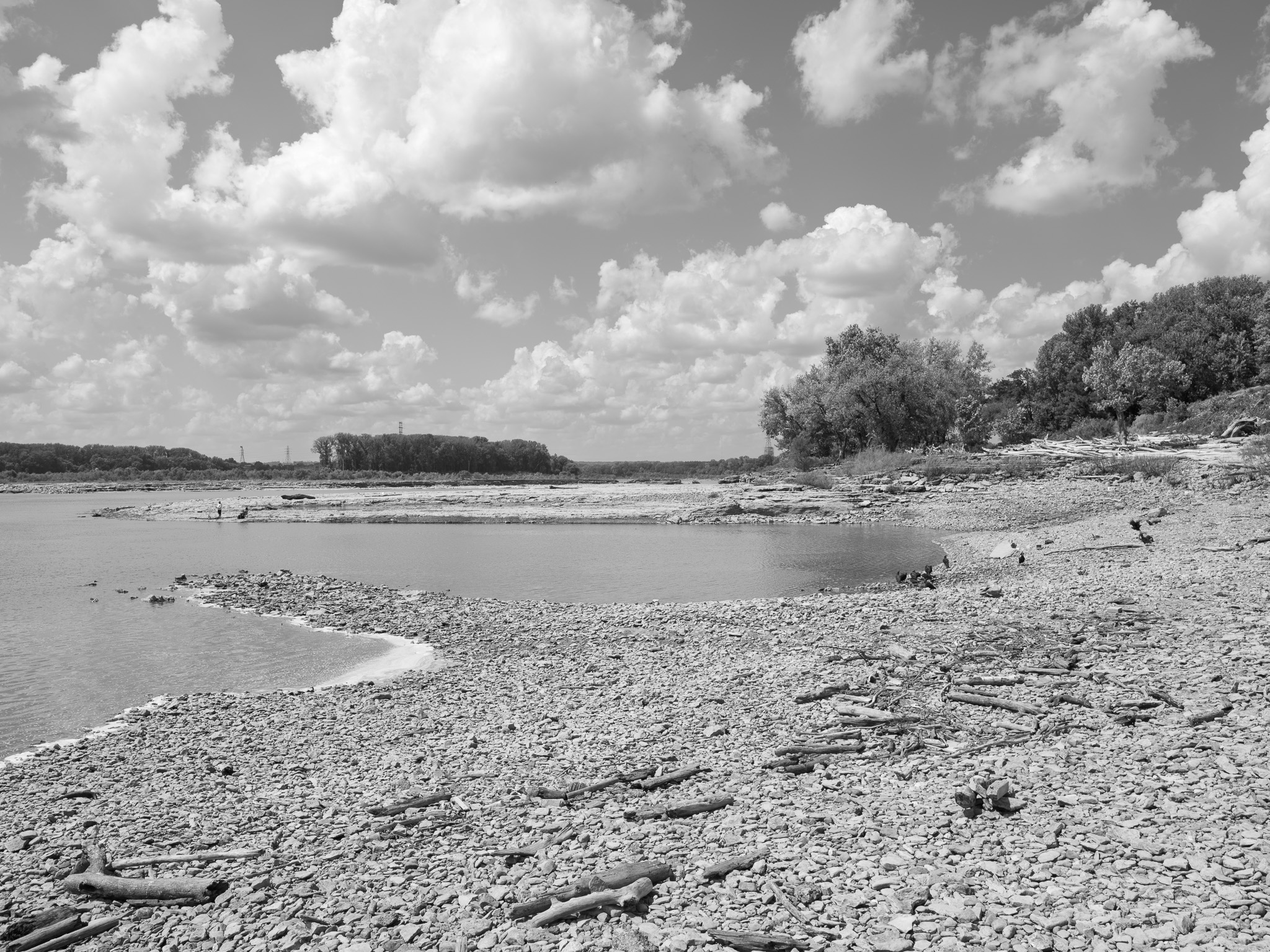
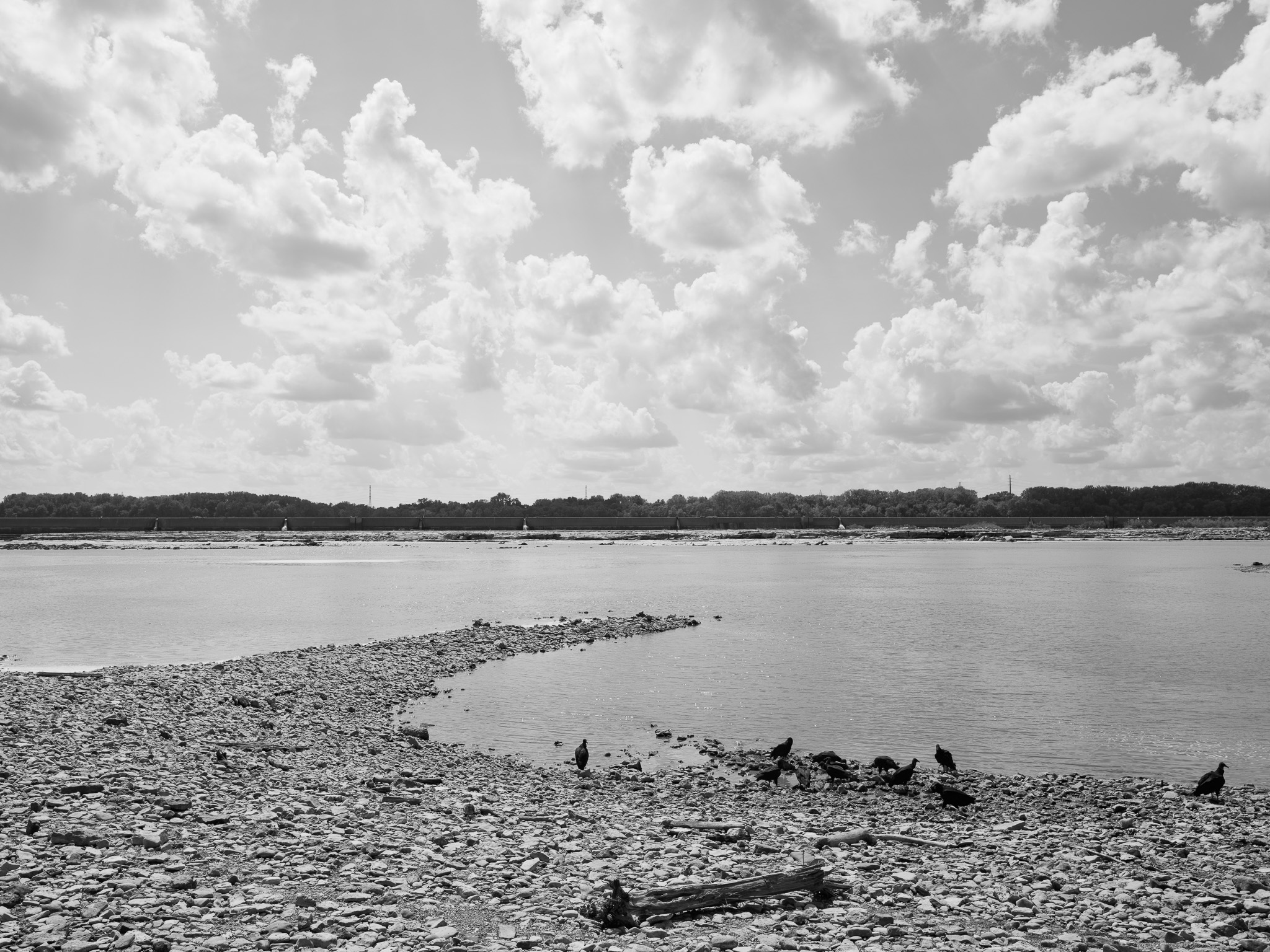
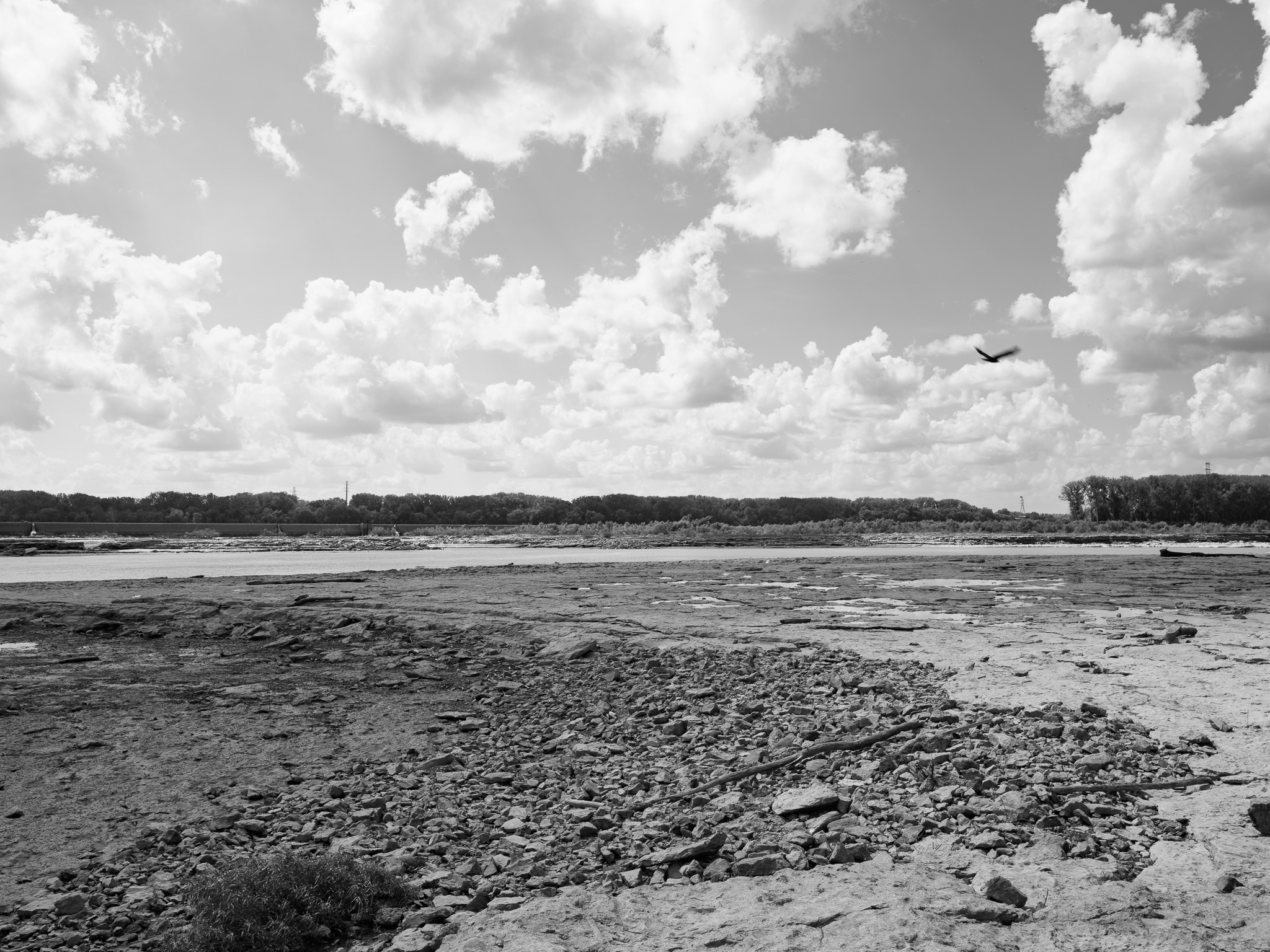
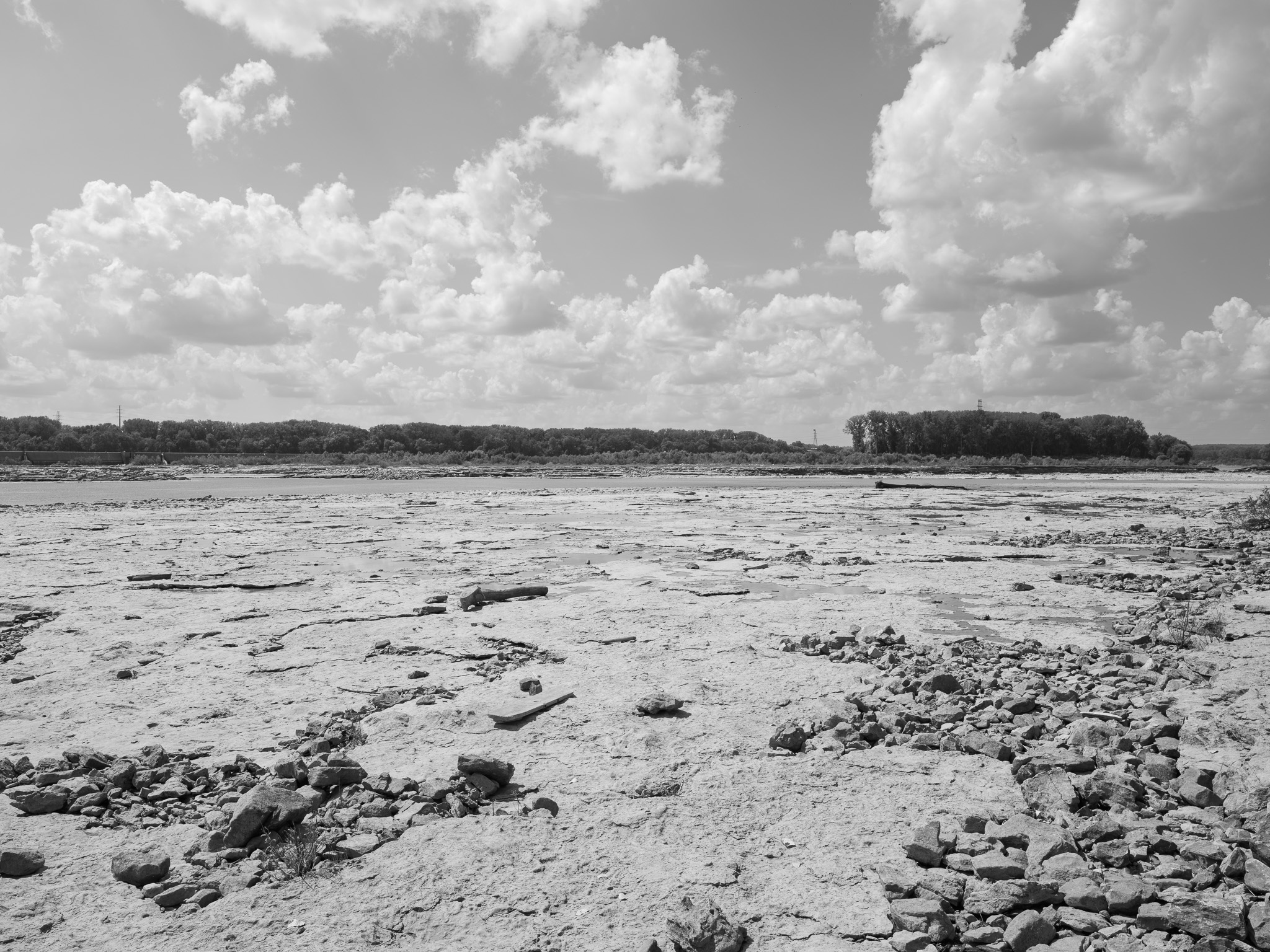
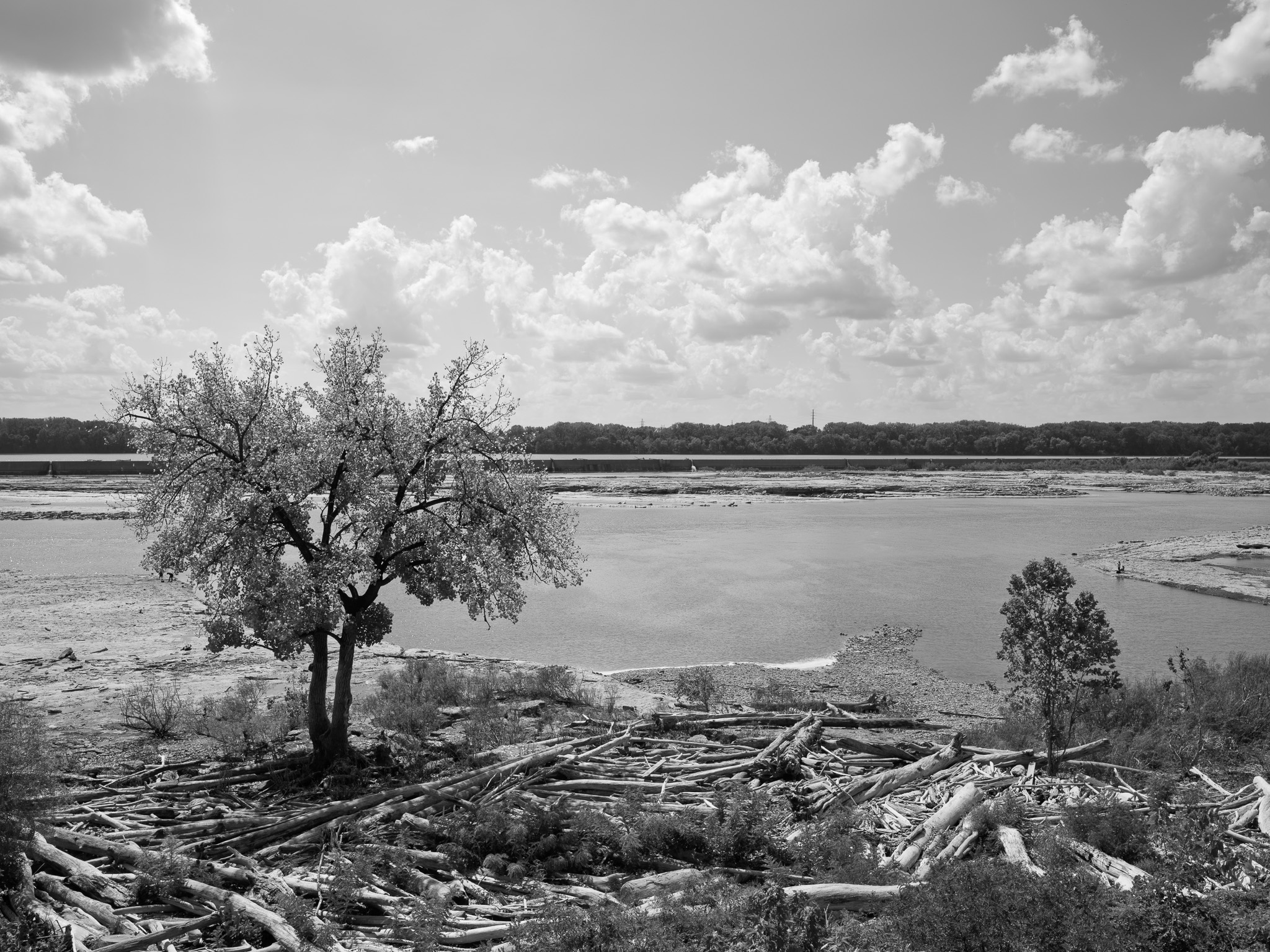
~390 Mya Middle Devonian Jeffersonville Limestone, a 35-foot sequence exposing one of North America's largest and most accessible Devonian fossil coral beds.
Shawnee (Shawanwaki) · Myaamia (Miami) · Haudenosaunee · Lenape (Delaware); the Falls a major river crossing and portage hub used continuously for at least 12,000 years, its abundant chert and diverse ecological zones drawing sustained precontact settlement and serving as a convergence point between upstream and downstream nations; George Rogers Clark's 1778 landing at Corn Island and the 1783-84 platting of Clarksville, the first authorized American settlement in present-day Indiana, displaced Indigenous presence at the site; the tract was formally excepted from Indian country by the Treaty of Greene Ville, August 3 1795.
Displacement & Tenure
Not ceded by a standard Indigenous treaty. Clark's Grant, Royce Cession No. 5 in Indiana's cession sequence: 150,000 acres set aside by the Virginia General Assembly on January 2 1781 and formalized in Virginia's 1784 deed of cession to the United States, rewarding George Rogers Clark and his Revolutionary War soldiers, with 1,000 acres platted for the town of Clarksville in 1783-84, the first authorized American settlement in present-day Indiana. The Grant was formally excepted from the limits of Indian country by the Treaty of Greene Ville, August 3 1795, the treaty establishing the region's actual Indigenous boundary, rather than being ceded directly by any nation.
Shadow History
The park stands beside Shippingport, once an independent riverfront town of some 600 residents that the Louisville and Portland Canal, begun in 1826 and opened in 1830 to bypass the falls, cut off into an island; the isolation and the loss of portage traffic emptied the town over the following century. The 1937 Ohio River flood, the same disaster that displaced more than 175,000 Louisville residents and fell disproportionately on the city's Black neighborhoods, which had fewer evacuation options and slower rescue, drove out most of the remaining Shippingport families, and in 1958 the federal government condemned the last private property to widen the canal, evicting residents whose families had lived there for over a century.
Ecology
Ohio River floodplain woodland with over 230 documented flowering plant species; the site is a major Mississippi Flyway stopover recording more than 270 bird and 125 fish species, and was one of John James Audubon's primary sketching grounds in the early 1800s.
Hydrology
A roughly 2.5-mile stretch of the Ohio River dropping about 26 feet over exposed Devonian limestone shelves, historically the only major navigation obstruction between Pittsburgh and New Orleans; the Louisville and Portland Canal (1826-1830) first bypassed the rapids, and the McAlpine Locks and Dam now impounds the river, submerging most of the historic falls and slowing flow enough that sediment has begun burying portions of the fossil beds. The beds are best exposed during the river's low-water season, August through October.