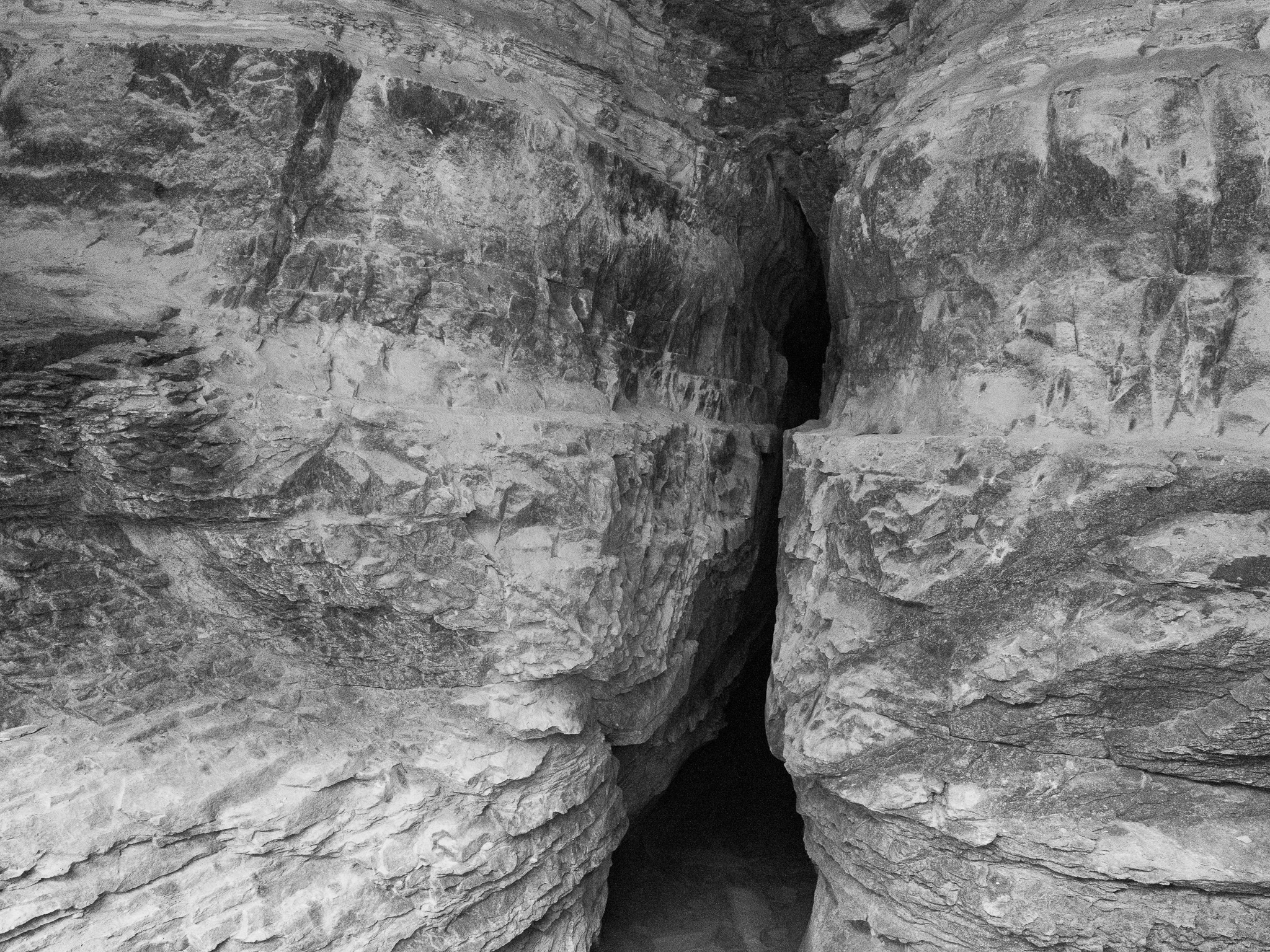
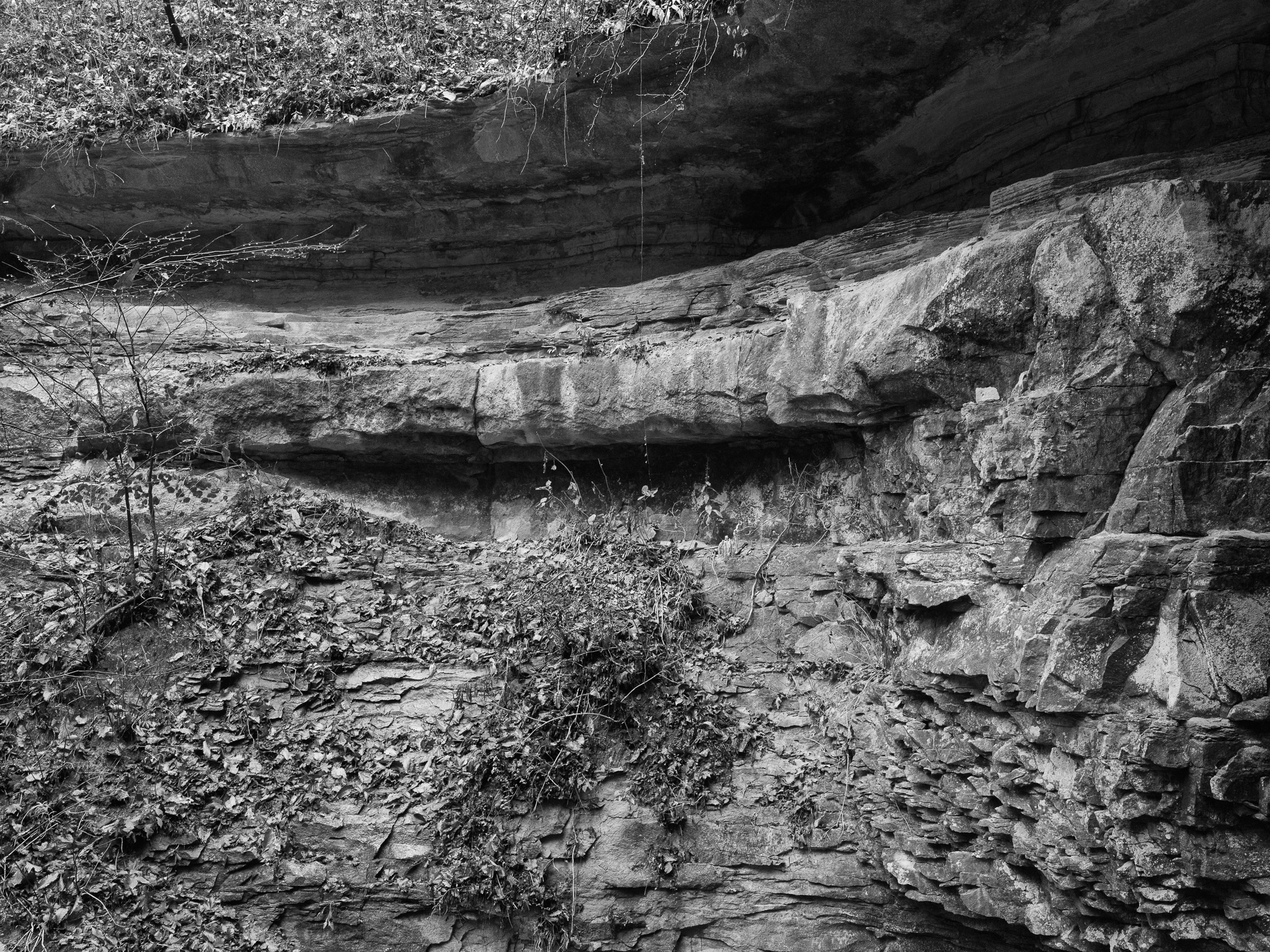
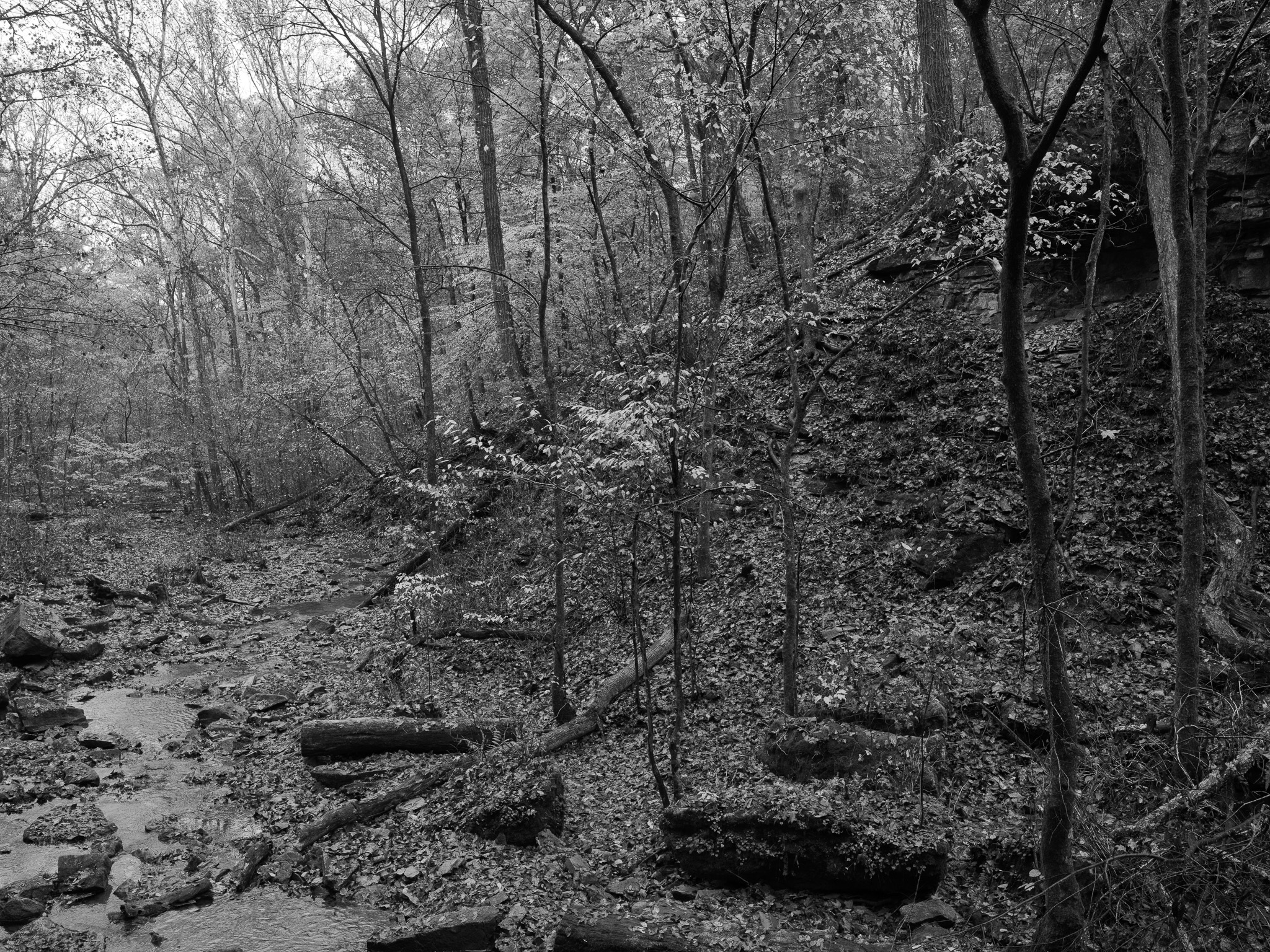
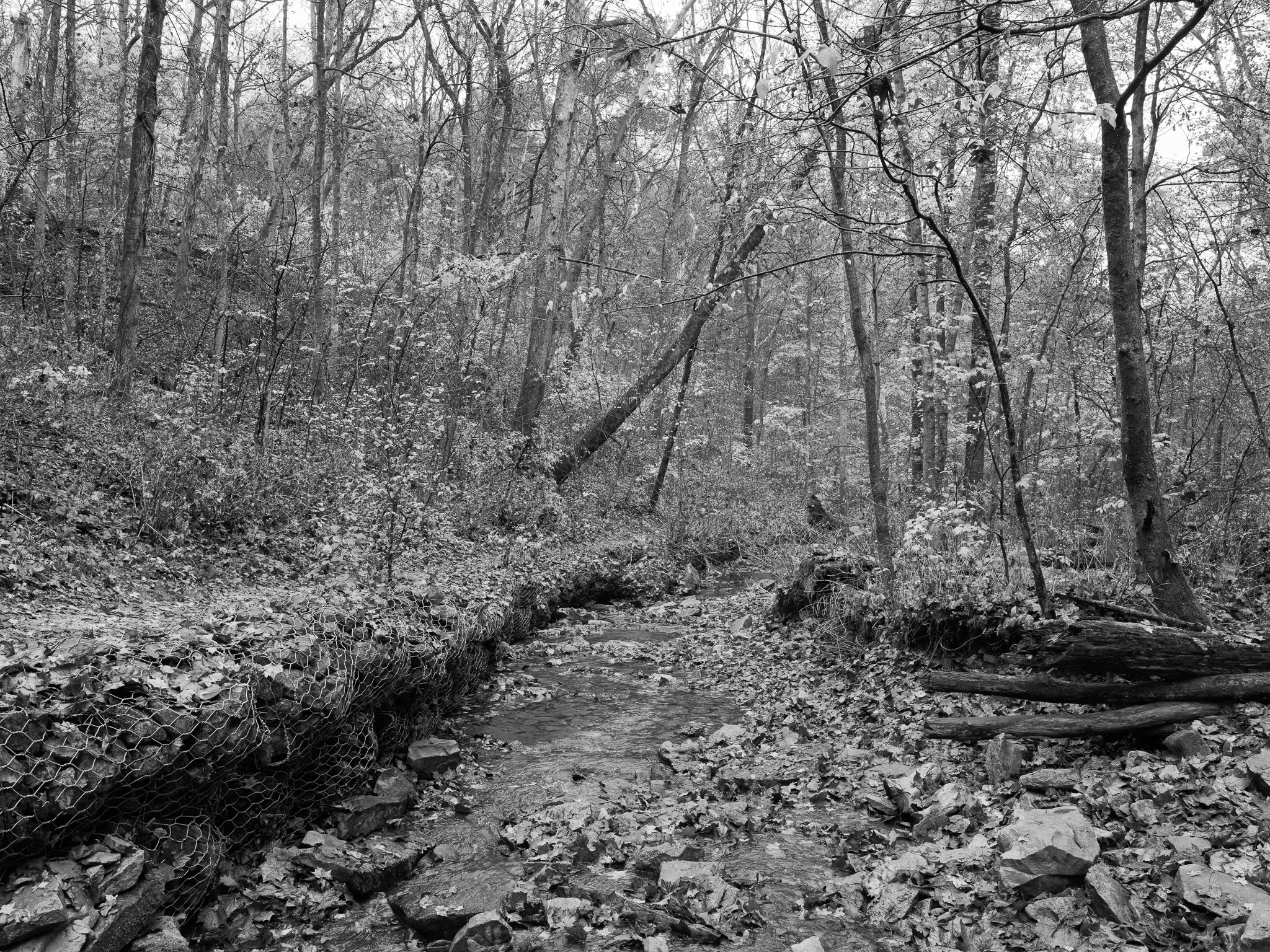
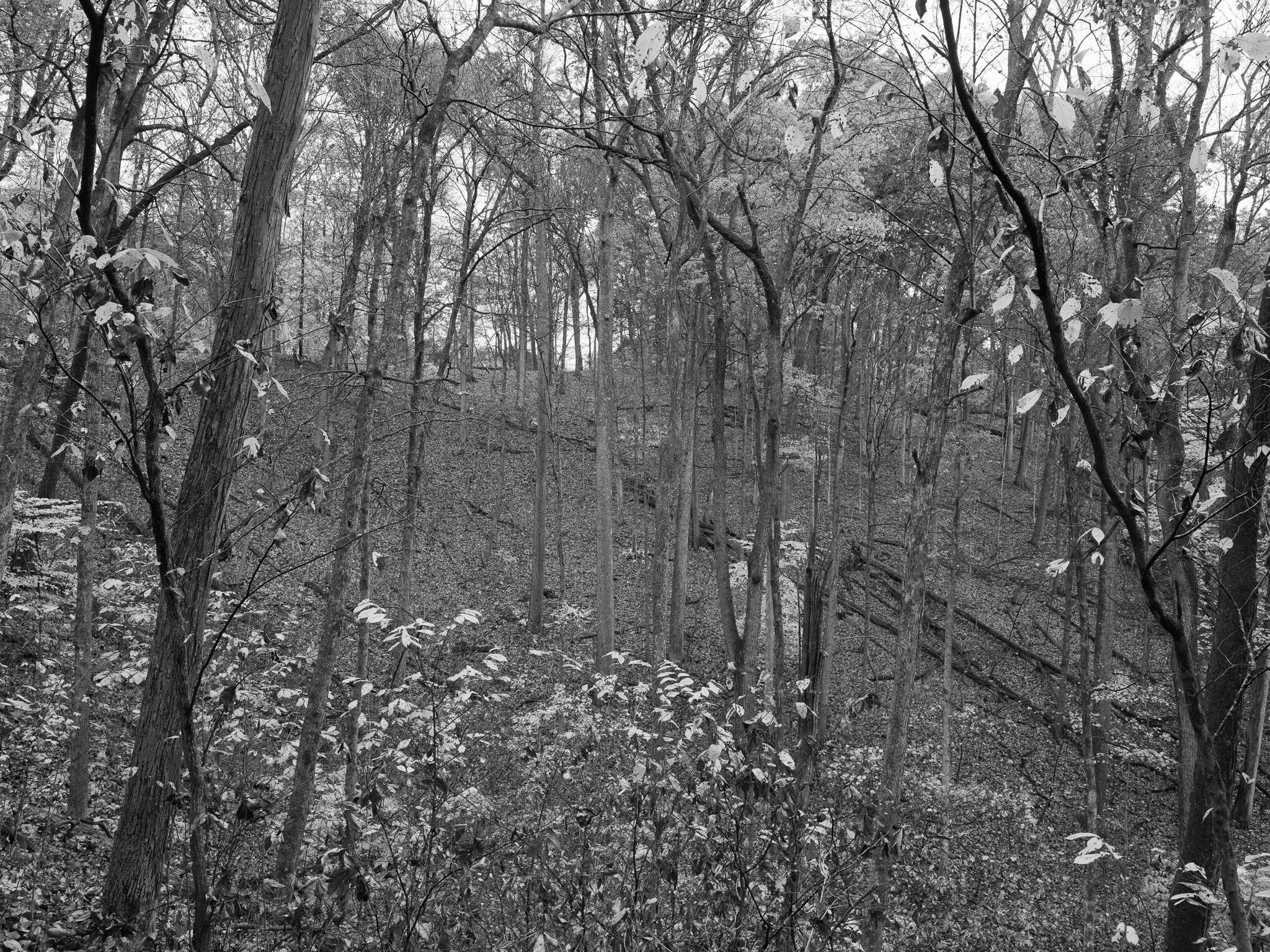
~340 Mya Middle Mississippian St. Louis Limestone of the Blue River Group, horizontally bedded skeletal grainstone to wackestone with chert nodules, capped by terra rossa red clay; the park lies on the Mitchell Karst Plain, where sinkholes exceed 1,000 per square mile and the limestone holds Twin, Bronson, Donaldson, and Hamer caves.
Epoch
Middle Mississippian (Blue River Group)
Lenape (Delaware) · Potawatomi · Myaamia (Miami) · Shawnee (Shawanwaki) · Kickapoo (Kiikaapoi) · Kaskaskia; Donaldson Cave was long called Shawnee Cave and George Donaldson's home here Shawnee Cottage; the Delaware, Potawatomi, Miami, and Eel River ceded this part of south central Indiana by the Treaty of Fort Wayne, September 30 1809.
Displacement & Tenure
Cession 71: Treaty of Fort Wayne (1809). Samuel Jackson, who had fought for the United States in the War of 1812 with the Canadian Volunteers, built the first mill here in 1814 and received a land patent from President Madison on October 26 1816; the village passed to the Bullitts in 1817, the Montgomery brothers in 1823, Hugh and Thomas Hamer in 1831, Jonathan Turley in 1881, and the Lehigh Portland Cement Company in 1892, which wanted the cave water rather than the village. George Donaldson's adjoining 200 acres, with Donaldson Cave and the old-growth woods, passed to the State of Indiana after his death because he was not a citizen and his will could not convey them, confirmed in Donaldson v. State of Indiana in 1913. The park was established in September 1927; Lehigh deeded 258 acres to the Department of Conservation for $1 on June 19 1928, keeping the water rights at Hamer Cave, with Indiana University and Lawrence County donating land as well.
Shadow History
The Civilian Conservation Corps built much of the park, including the Spring Mill Inn, Spring Mill Lake, and most of the trails, from 1933 to 1941, in segregated camps. Company 1536 was a white company; its October 1934 report described the camp as mixed race and due to be all white by the end of the month, and Company 539, a Black company, arrived in November 1934 at a second camp, SP-10. On August 26 1935 the Bedford paper reported riots in Mitchell, a confrontation between Black enrollees and Mitchell residents that escalated to involve hundreds of people, and the Mitchell Tribune reported a military investigation three days later; by the next enrollment period Spring Mill held only Company 1536. The Pioneer Village interpreted as the year 1863 is itself a 1930s assemblage: Lieber and E.Y. Guernsey rebuilt the surviving mill structures and brought in log buildings from elsewhere in the state. Lehigh Portland Cement still holds the water rights it kept in 1928, and a holding area and dam inside Hamer Cave send the spring that once ran the mill to the company's lime kilns.
Ecology
Donaldson's Woods, 145 acres of old-growth western mesophytic forest unusually rich in white oak with beech and sugar maple gaining, one of the most impressive stands of original forest left in Indiana; the 459-acre Mitchell Sinkhole Plain, the largest undisturbed sinkhole plain under natural forest in the state; prairie plants including shooting star, bird's-foot violet, hoary puccoon, prairie dock, and New Jersey tea on the dry slope over Donaldson Cave. Blind cavefish are commonly seen on the Twin Caves boat tour.
Hydrology
Cave springs that never freeze issue from Hamer, Donaldson, Bronson, and Twin caves and once powered gristmills, a wool mill, a sawmill, and a distillery; the spring from Hamer Cave still runs the 1817 limestone gristmill's flume, and Spring Mill Lake, impounded by the CCC in 1937, fills with silt carried in from the cave-fed streams.